
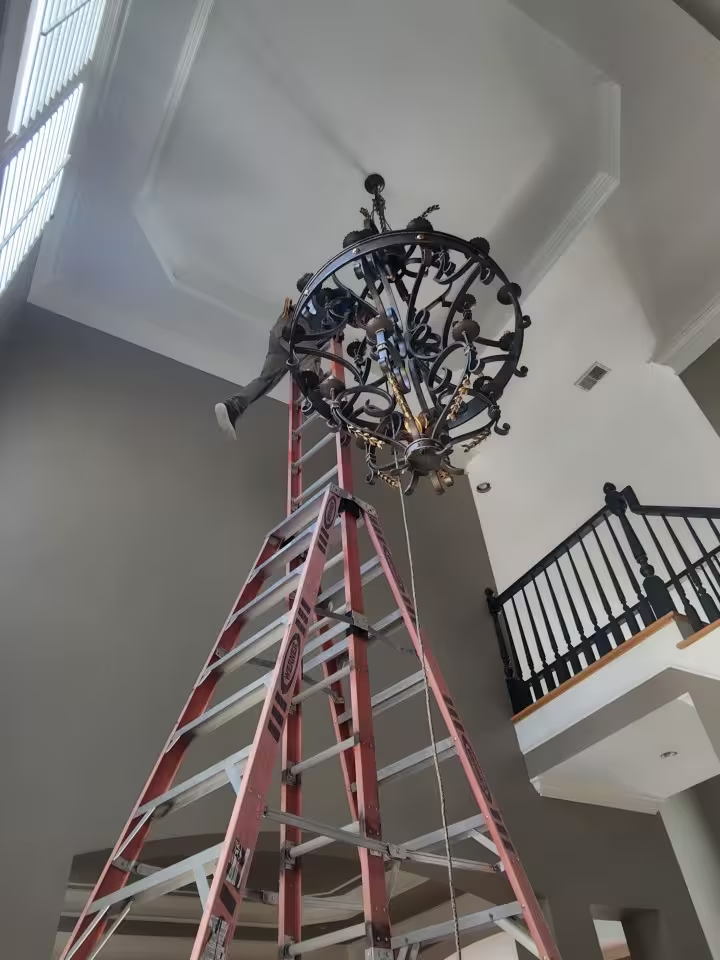
A chandelier can transform a room, but a successful installation depends on more than choosing a fixture that looks good online. Ceiling height, fixture size, support, electrical conditions, access, and assembly requirements all affect the final result.
These chandelier installation tips will help you plan the project before the fixture is unpacked, lifted, or wired.
1. Choose the right size for the room
Scale matters. A chandelier that is too small can look underwhelming, while a fixture that is too large can overpower the room or create clearance problems.
For dining rooms, foyers, living rooms, and stairwell areas, consider:
- room dimensions,
- ceiling height,
- furniture placement,
- sightlines from nearby rooms,
- fixture diameter,
- overall drop length,
- chain or cable adjustment range.
If the chandelier is going over a dining table, the fixture also needs to relate to the table size and room layout.
2. Confirm the ceiling height before ordering
Ceiling height affects both the fixture selection and the installation method. A chandelier that works in a room with a ten-foot ceiling may not work in a two-story foyer without additional chain, cable, scaffolding, or special access planning.
High ceilings, vaulted ceilings, and stairwell-adjacent fixtures often require more planning than standard rooms. If your project involves difficult access, review our high-ceiling chandelier installation page.
3. Check the ceiling box and support structure
A chandelier should never be installed on a questionable mounting point. The ceiling box, bracket, screws, joists, and support hardware matter as much as the fixture itself.
Before installation, confirm whether the existing box is:
- secure,
- properly mounted,
- compatible with the chandelier bracket,
- appropriate for the fixture weight,
- free of stripped tabs or damaged screw holes.
For more detail, read Can My Ceiling Box Support a Chandelier? and review our ceiling box replacement service.
4. Plan for assembly time
Many chandeliers do not arrive ready to hang. Crystal chandeliers, multi-arm fixtures, and modern sculptural fixtures may require significant assembly.
Assembly can include attaching arms, installing sockets or shades, hanging crystals, sorting parts, adjusting cables, and confirming balance. This work can take longer than the actual electrical connection.
If the chandelier arrives in many pieces, review our crystal chandelier installation information before scheduling.
5. Buy bulbs before installation day
Bulbs are often overlooked. The fixture may require a specific base type, wattage, color temperature, dimmable bulb, or specialty shape.
Before the appointment, confirm:
- bulb base type,
- bulb quantity,
- LED compatibility,
- dimmability,
- desired color temperature,
- whether bulbs fit inside shades or glass covers.
Having the correct bulbs ready allows the fixture to be tested before the installer leaves.
6. Consider the dimmer before the fixture is installed
A chandelier may look better and function better on a dimmer, but not every dimmer is compatible with every bulb or fixture. Flickering, buzzing, poor low-end dimming, or uneven performance can happen when bulbs and dimmers are mismatched.
If you plan to use a dimmer, see our dimmer switch installation page.
7. Clear the work area
The installation area should be clear before work begins. Remove furniture, rugs, fragile decor, and anything that limits ladder placement or safe movement.
For high-ceiling fixtures, the floor area below the chandelier may need to remain open for ladders, scaffolding, fixture staging, and tool setup.
8. Save packaging and instructions until the job is complete
Do not throw away packaging, parts bags, labels, or instructions before the chandelier is installed and tested. Small parts may be hidden in foam, taped to packaging, or separated into accessory bags.
Instructions can also provide weight information, mounting details, wiring notes, or assembly diagrams.
9. Decide whether a chandelier lift makes sense
If the chandelier will hang high above the floor, a chandelier lift may make cleaning and bulb replacement safer over time. A lift is especially useful in two-story foyers, stairwells, vaulted rooms, and homes with difficult fixture access.
Read Do You Need a Chandelier Lift? or visit our chandelier lift installation page.
10. Hire for the actual complexity of the job
Chandelier installation is not always basic light fixture replacement. Some projects involve fragile crystals, heavy fixtures, tall ceilings, finished interiors, old electrical boxes, difficult access, or detailed assembly.
The right installer should understand the fixture, the room, the mounting point, and the risk involved.
Next step
If you are planning a chandelier installation, gather fixture photos, room photos, ceiling height, product details, and any known support or electrical concerns. Then submit the details through the pricing request page so the project can be reviewed accurately.